

Cold outreach fails for boring reasons. The list is stale. The emails land in spam. The message reads like it was written for 5,000 people because it was. And the rep spends more time copying data between four tools than talking to prospects. lemlist is built to close all four gaps at once — an AI outbound platform that sources leads, enriches them, personalizes the message, sends across multiple channels, and protects deliverability from a single account.
What Is lemlist?
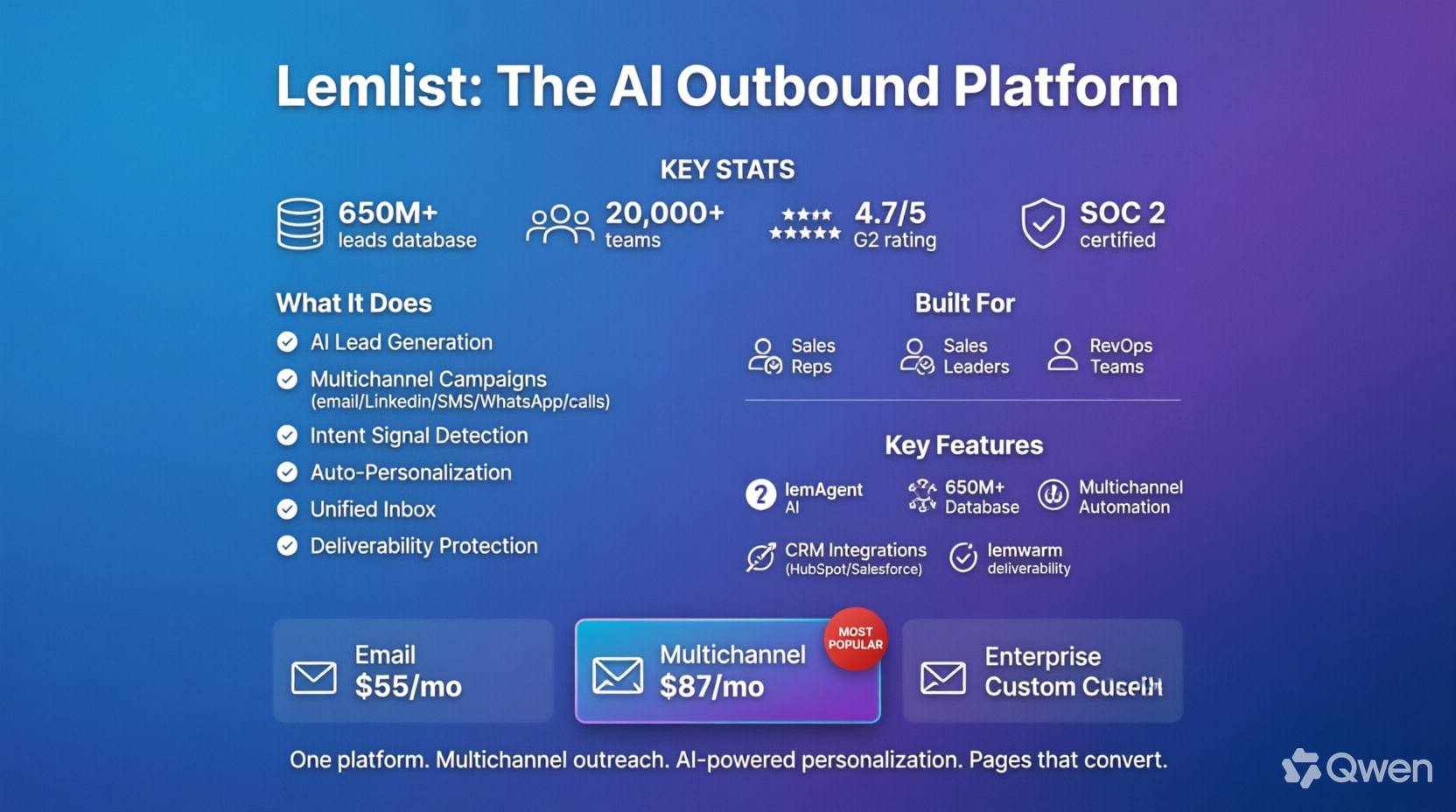
lemlist describes itself as an AI outbound platform for relevant outreach at every scale, using AI agents to research, personalize, and engage prospects on autopilot, with multichannel outreach powered by real context and intent signals. The company states that over 20,000 sales teams run their entire outbound in lemlist, and the platform holds a 4.7/5 rating on G2 based on 1,396 reviews. lemlist is also SOC 2 certified and GDPR compliant.
Core Product Features
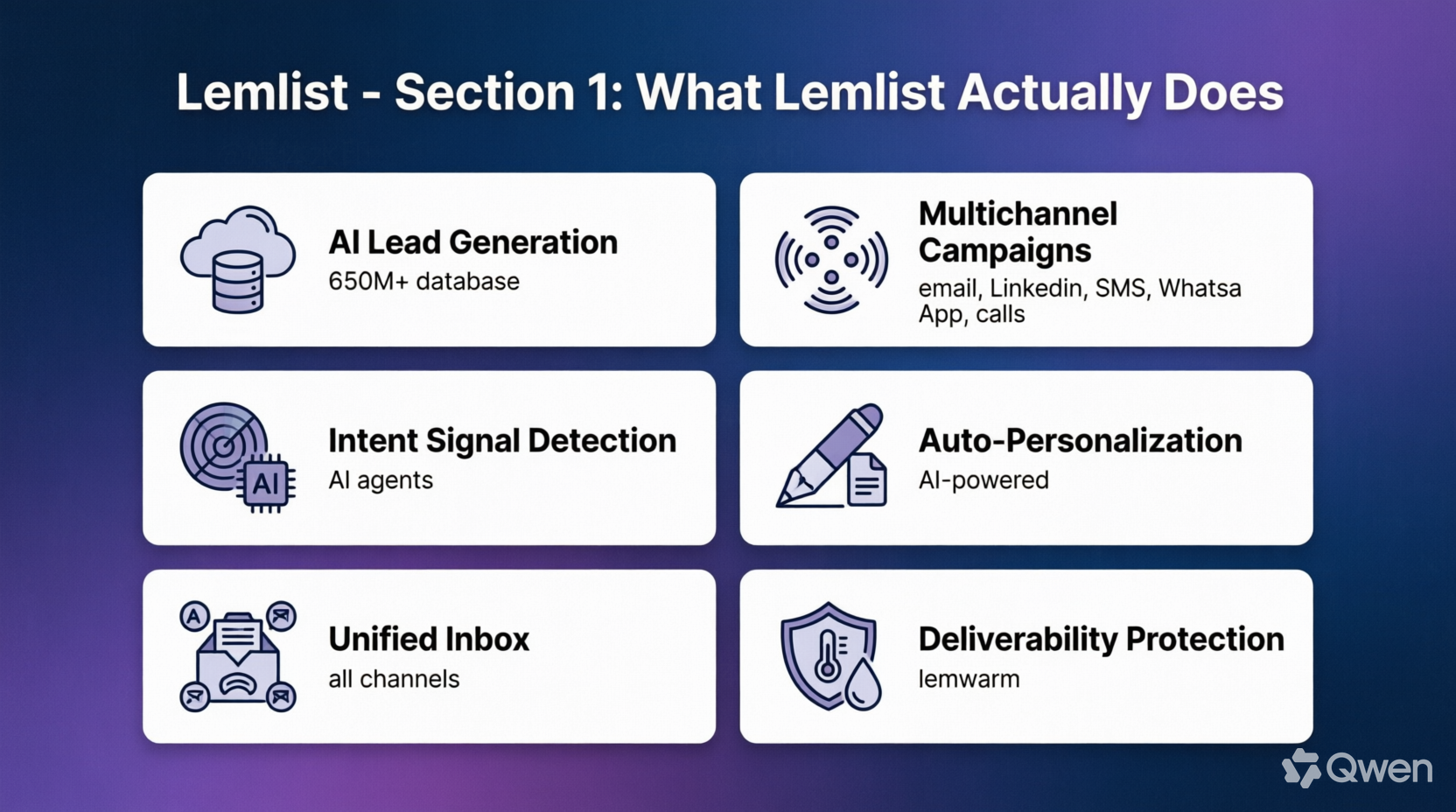
650M+ lead database. Search for ICP-fit accounts and contacts using smart filters, or upload your own leads from a CRM or CSV. Contacts are unlimited on every plan, with account-based prospecting and lead scoring included.
Email Finder, Verifier, and Phone Number Finder. Verified contact data is sourced from 25+ top data providers on a pay-per-success basis — you're only charged when an action actually succeeds.
lemAgent. lemlist's AI agent handles sourcing, research, and personalization autonomously, and it's included on every plan rather than reserved for higher tiers.
Intent Signal Agents. These detect real buying signals — a company visiting your website, hiring activity or job changes, a fundraise, or LinkedIn engagement — and then suggest multichannel sequences, personalized copy, and AI prompts tailored to that specific trigger via the AI Context Center.
Data Enrichment Agents. These pull structured insights from LinkedIn, company websites, CRM data, and Claap sales call recordings, converting scattered data into context you can use to qualify, prioritize, and tailor outreach.
Multichannel sequences. Run campaigns across email, LinkedIn, in-app calling, WhatsApp, and SMS from one workflow, with conditioned next steps, campaign scheduling, auto-launch, and auto-stop. LinkedIn automation covers profile visits, follows, invites, text messages, and AI-personalized voice notes.
Unified Inbox. Every conversation lands in one inbox regardless of sender or channel.
Deliverability Hub and lemwarm. Included on every plan: automated warm-up, inbox rotation, rotating IPs, a smart sending algorithm, custom tracking domains, DNS setup testing, deliverability alerts, and centralized mailbox and domain health monitoring.
AI inbox handling. AI reply intent detection, out-of-office detection, and AI-generated replies are available on all plans; AI sales call summaries and AI CRM auto-fill come with Multichannel and above.
Developer and AI tooling. lemlist provides an API, a CLI, an MCP server, and native Claude Skills — all included on every plan — plus a Chrome extension for working from LinkedIn and Gmail. Integrations cover HubSpot, Salesforce, Pipedrive, Attio, Zapier, Make, n8n, Clay, and VoIP tools like Aircall and Ringover, with 500+ integrations total.
Advantages
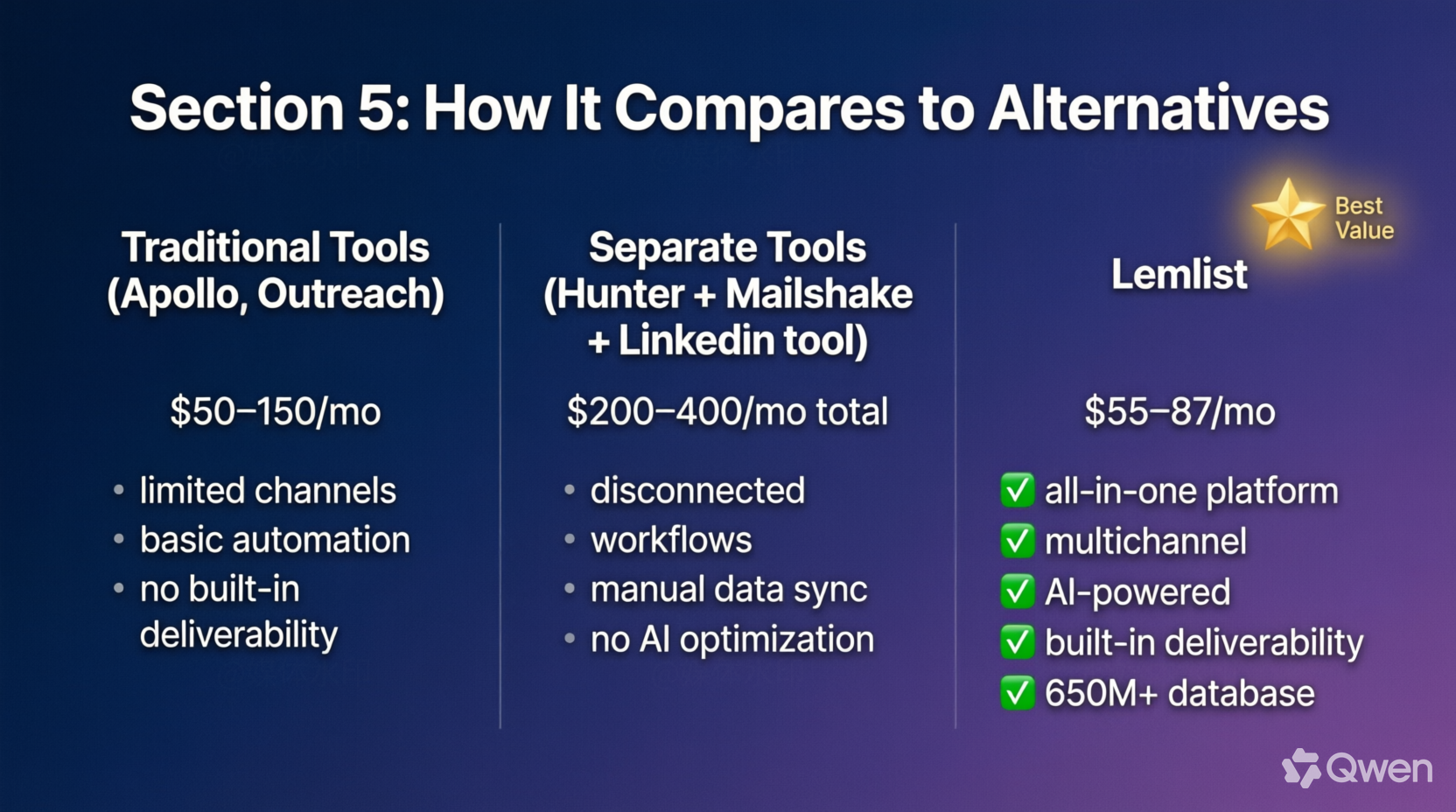
- Genuine all-in-one consolidation. Database, enrichment, sequencing, calling, LinkedIn automation, and deliverability live in one platform instead of four subscriptions.
- Deliverability included by default. lemwarm and the full Deliverability Hub ship with every seat, including the entry tier — many competitors charge separately for warm-up.
- AI agents available on every plan. lemAgent, intent signal agents, enrichment agents, and MCP access aren't gated behind the top tier.
- Pay-per-success credits. Enrichment charges only when data is actually found, rather than burning credits on failed lookups.
- Unlimited users on the Email plan. A rare pricing structure — a whole team can share the entry plan.
- Strong AI-assistant support. MCP server, CLI, and Claude Skills make it one of the few outbound platforms operable directly from an AI assistant.
Limitations
- Channel access is tier-gated. LinkedIn, SMS, in-app calling, WhatsApp, and the Unified Inbox are not available on the Email plan — they require Multichannel ($87+/user/month) or Enterprise. If multichannel is the main draw, the entry price isn't really $55.
- Email plan is volume-capped. It's limited to 50,000 emails per month, while unlimited sending starts at Multichannel.
- Credits are a separate, variable cost. Enrichment and intent signals are billed outside the subscription, and higher-value signals are expensive — LinkedIn engagement signals start at 400 credits each (about $4 per signal), which can add up quickly at scale.
- Enterprise-only governance. SSO/SAML, custom user roles, activity logs, and CRM-embedded usage all require a custom-priced Enterprise plan.
- Trial limits after expiry. After the 14-day trial, you keep your account, campaigns, and leads, but can no longer send new campaigns.
Who lemlist Is Built For
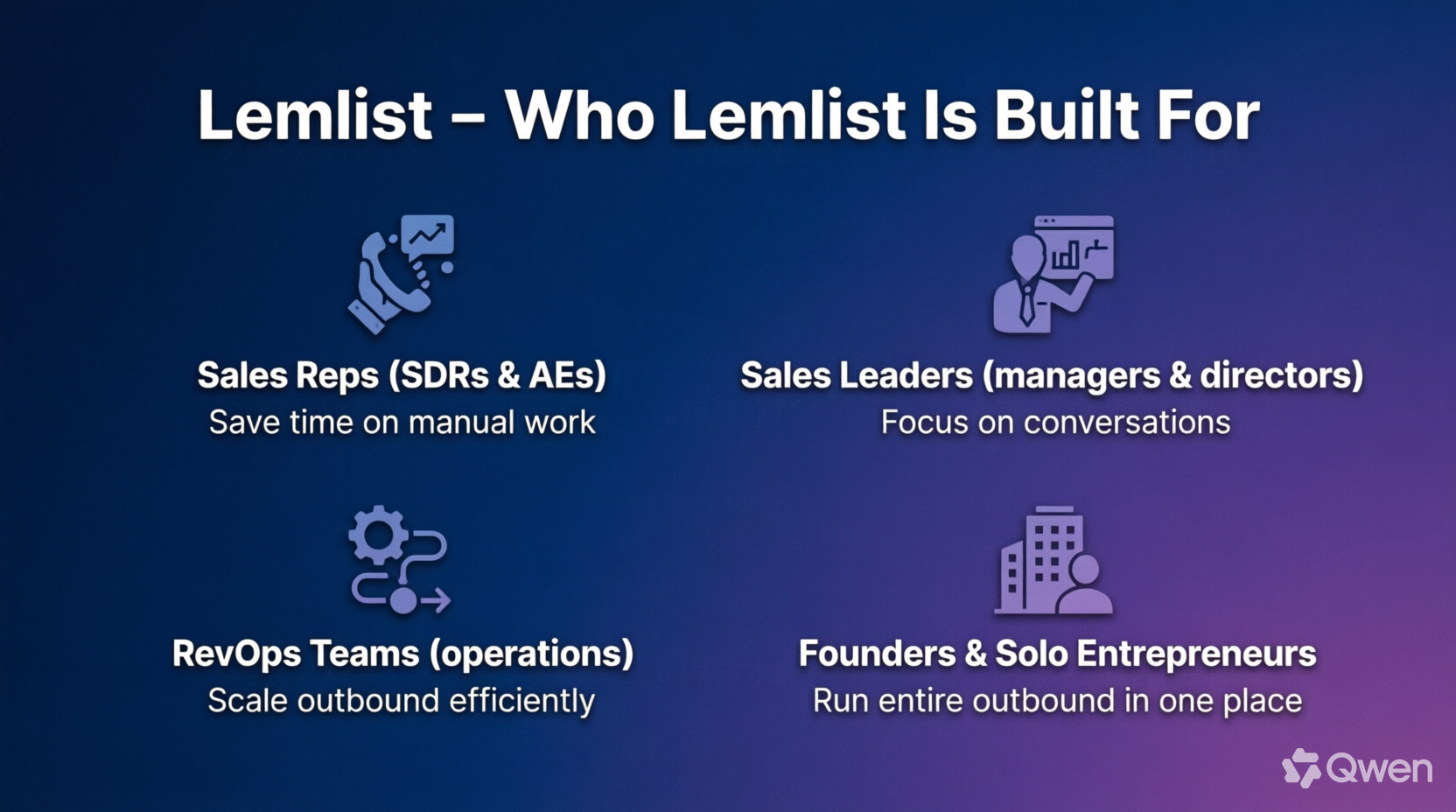
lemlist states it's built for sales and growth teams who want to spend less time on manual work and more time closing deals — helping sales leaders ramp teams faster, sales ops streamline workflows, and SDRs and AEs focus on conversations instead of admin. The site organizes solutions by role: Sales Reps, Sales Leaders, RevOps, and Founders. The company notes it fits solo founders, agencies, and scaling teams alike.
Customer Problems This Solves
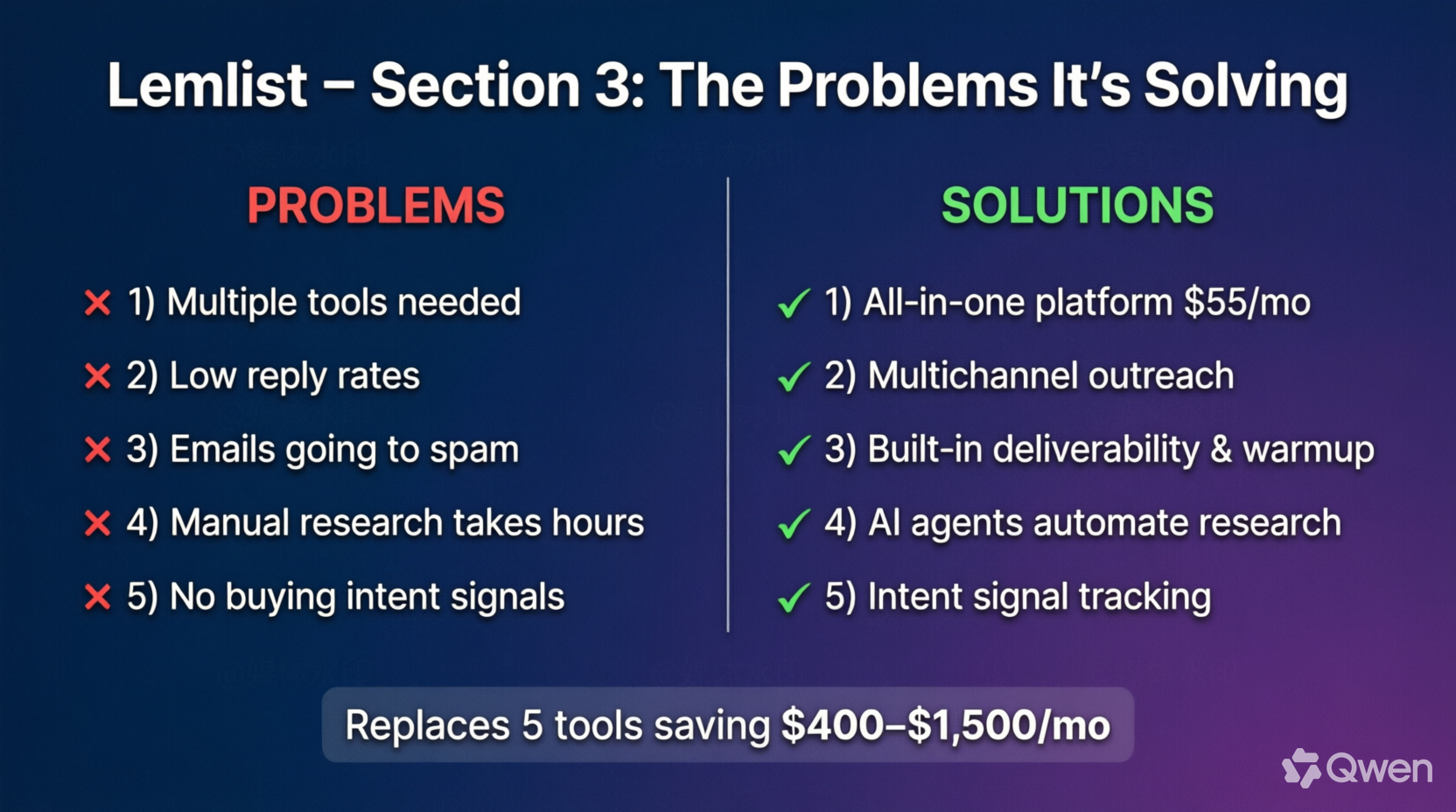
The pain points map directly to daily outbound reality: emails landing in spam and killing campaign performance; lead lists that are outdated or missing phone numbers; generic messaging that gets ignored because it lacks real context; outreach that stops at email when prospects are more responsive on LinkedIn; conversations scattered across channels with no single view; and reps burning hours on manual research and CRM data entry. lemlist's consolidation approach means fewer tools to integrate, and its agent layer means the research and personalization work happens without a human doing it line by line.
Key Differentiators
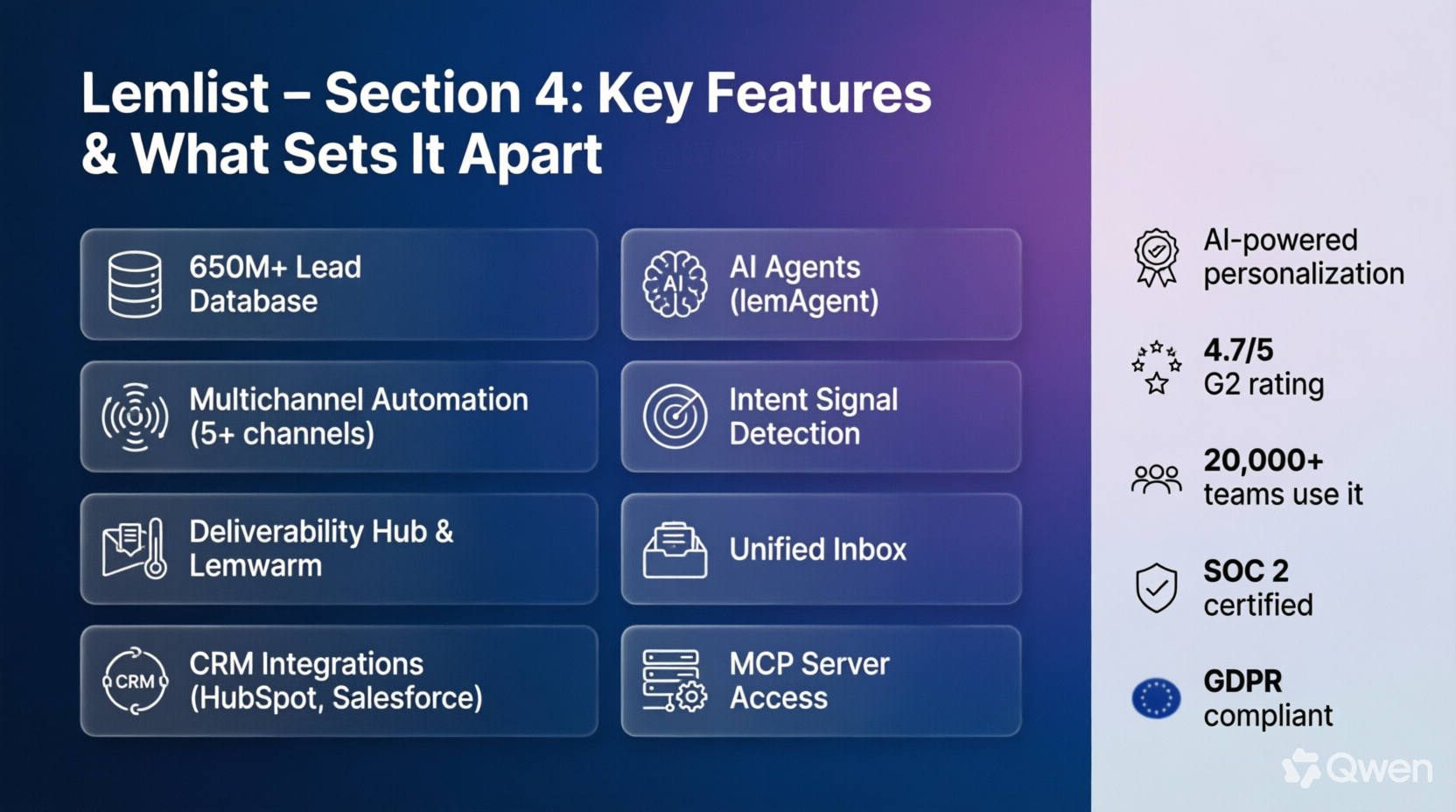
Three things stand out. First, AI agents operate at the sourcing and signal layer, not just the writing layer — outreach can be triggered by a fundraise or a job change rather than a calendar date. Second, deliverability is treated as core infrastructure included in every seat, not an upsell. Third, the MCP server, CLI, and Claude Skills make lemlist unusually accessible from AI assistants, letting teams run outbound workflows programmatically or conversationally.
Detailed Usage Guide
- Start the free trial. Sign up for the 14-day free trial — no credit card required. It gives full access to the Multichannel plan.
- Follow the in-app setup. After signing up, the dashboard guides you through setup step by step, with in-app chat support available throughout.
- Connect your mailboxes. Link Google, Microsoft, or SMTP accounts. You can also purchase domains and email accounts directly in-app if you're building fresh sending infrastructure.
- Configure deliverability first. Run the DNS setup test, enable lemwarm warm-up, set your custom tracking domain, configure sending limits, and turn on inbox rotation before launching anything. Skipping this step is the most common cause of outbound failure.
- Build your lead list. Search the 650M+ database with smart filters, import from your CRM or CSV, or export leads directly from LinkedIn using the Chrome extension.
- Enrich and score. Run the email finder, phone number finder, and data enrichment agents to fill in verified contact data and pull context from LinkedIn, websites, and CRM records. Apply lead scoring to prioritize.
- Set up intent signals (optional). Turn on intent signal agents to track website visits, hiring changes, fundraises, or LinkedIn engagement so outreach triggers on real buying activity.
- Build the sequence. Create a multichannel campaign combining email, LinkedIn steps, calls, SMS, or WhatsApp. Use Liquid syntax, custom text and images, and conditioned next steps so the path adapts to each prospect's behavior.
- Preview and review. Use step preview and campaign review to check every step before it goes live, then schedule or auto-launch.
- Manage replies in the Unified Inbox. Handle all responses in one place, with AI reply intent detection and out-of-office detection sorting what actually needs your attention.
- Sync and report. Connect HubSpot, Salesforce, Pipedrive, or Attio so activity flows into your CRM, and use custom reporting to track performance. Monitor the Deliverability Hub continuously for mailbox health alerts.
Pricing Snapshot
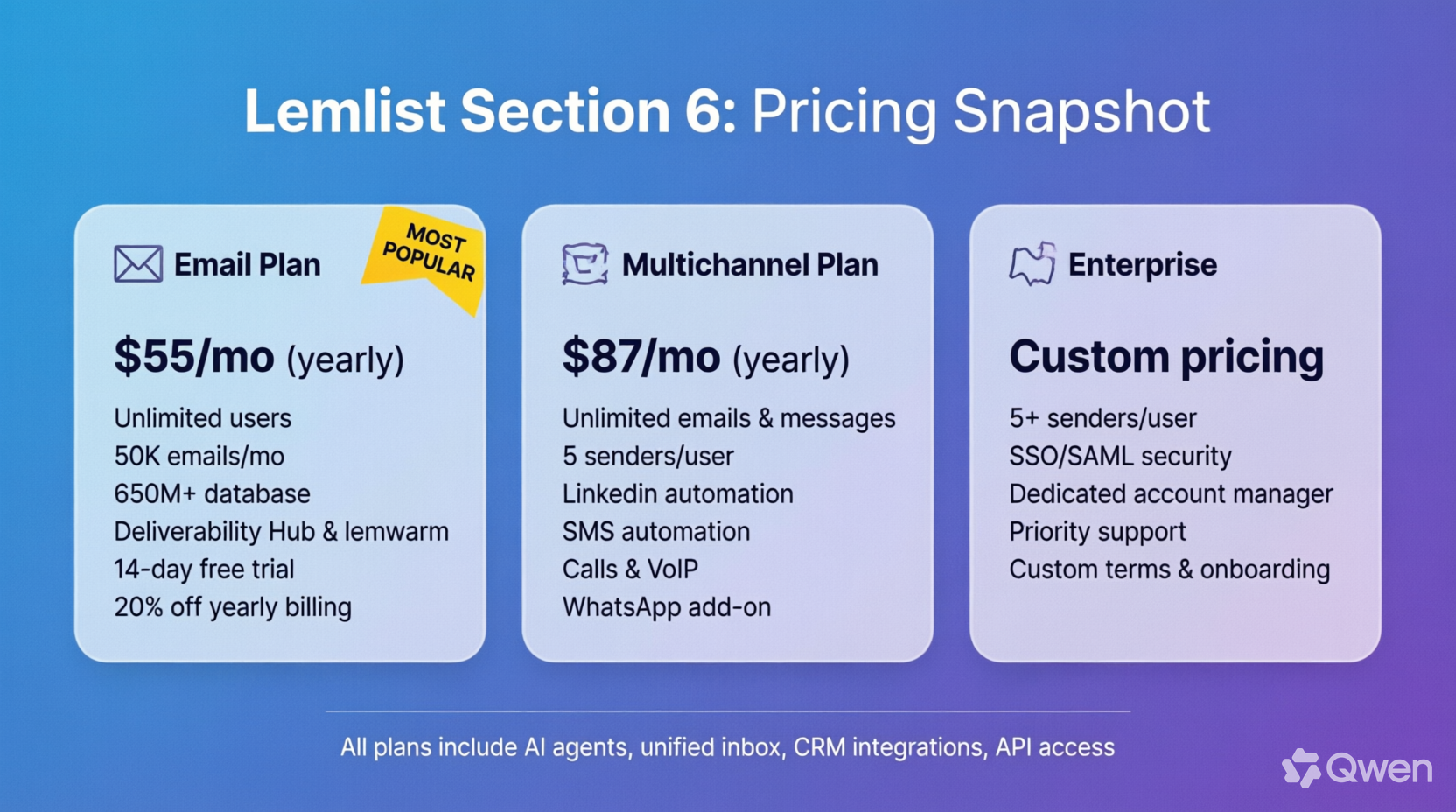
lemlist offers a 14-day free trial with no credit card required. Plans are billed monthly, with 10% off quarterly or 20% off annually: Email at $69/month per user ($55 annually) with unlimited users and 50,000 emails/month; Multichannel at $109/month per user ($87 annually) — the most popular tier — adding unlimited emails and messages, 5 senders per user, LinkedIn/SMS/WhatsApp automation, in-app calling, and the Unified Inbox; and Enterprise at custom pricing for teams of 5+, adding CRM-embedded usage, custom roles and permissions, SSO/SAML, activity logs, a dedicated account manager, and 1:1 onboarding. Enrichment and intent signals run on a separate pay-per-success credit system (1 credit = $0.01; verified emails cost 5 credits, phone numbers 20 credits), starting at $10 per rechargeable pack.
Bottom Line
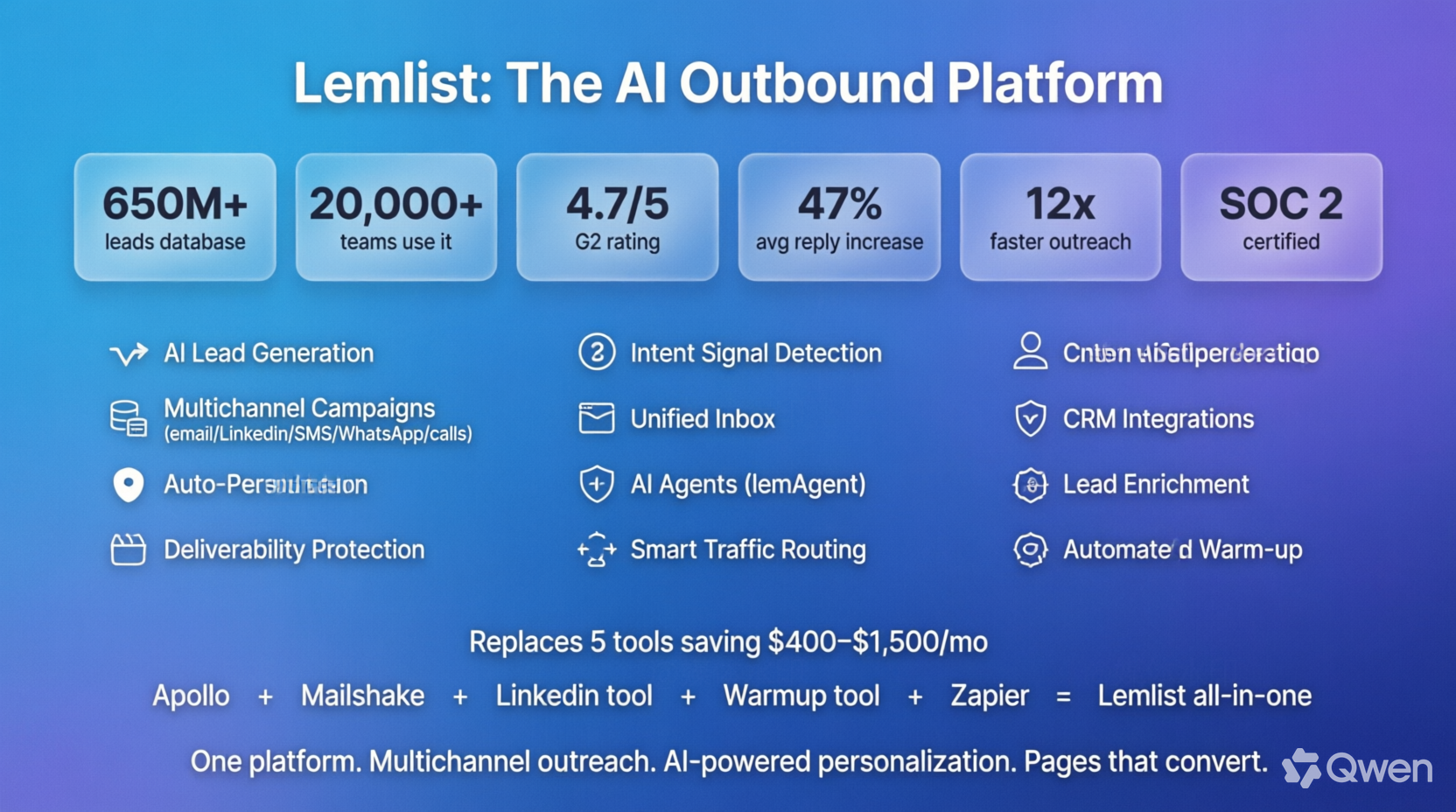
lemlist suits sales and growth teams building a repeatable, signal-driven outbound motion who would otherwise pay for a database tool, an enrichment service, a sequencer, and a warm-up tool separately. Its strongest assets are the agent layer that does research and triggering automatically, deliverability protection bundled into every seat, and unusually deep AI-assistant tooling. The main caveats are that true multichannel requires the $87+ tier, and that credit-based enrichment is a variable cost sitting on top of the subscription — so heavy enrichment users should model that spend before committing.





Write Your Review
No reviews yet. Be the first to share your experience!